


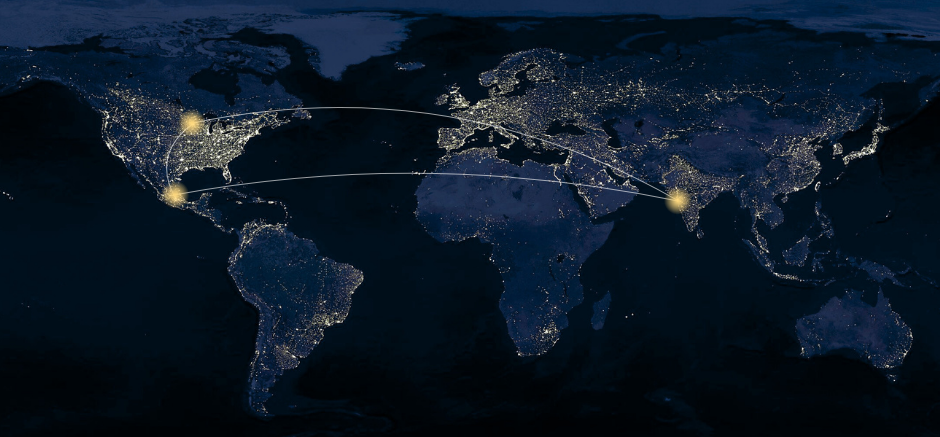

When a crisis strikes, global companies often discover just how local their reputations really are. The same issue can play out very differently in Mexico City, Mumbai, or Minneapolis — shaped by cultural norms, political climates, media dynamics, and public expectations.
That’s why global brands need more than a playbook. They need local partners who understand the nuance behind how communities think, talk, and react, and who can translate global strategies into credible, contextually smart actions on the ground.
At IPREX, our partners across more than 100 cities share one goal: helping organizations respond to crises with clarity, cultural intelligence, and credibility. Here’s what our colleagues in Mexico City, Mumbai, and Minneapolis have learned from guiding clients through high-stakes moments around the world.
Mexico City: Understand the Landscape Before You Act
For leaders of multinational companies with a direct or indirect presence in regions such as Latin America, it is important to have access to local expert advice that informs them about the political, economic, and social frameworks of the country and community where they face a critical or potentially critical situation.
The world is heterogeneous, and what may work in one country or city in a developed market is not necessarily useful, effective, or feasible elsewhere.
For example, corruption is a persistent issue in Latin America. Most countries in this region rank in the lower half of Transparency International’s 2024 Corruption Perceptions Index, with the notable exceptions of Uruguay, Chile, and Costa Rica, which rank 13th, 32nd, and 42nd, respectively. For reference, Brazil and Mexico, the two largest economies in the region, rank 107th and 140th, respectively.
To avoid stepping on landmines, particularly if you are unfamiliar with the environment, it is critical to have a reliable communications and issues management partner with the necessary credentials to guide you through a crisis. Dextera Comunicación in Mexico City is an expert guide for companies seeking advice for communicating in the region.
Mumbai: Speed with Sensitivity — and the Power of Local Voices
In India’s complex and rapidly evolving media environment, two key lessons stand out when advising clients on crisis management. Bloomingdale PR in Mumbai is an expert partner to understand the nuances of communicating in India.
- Speed with Sensitivity
India’s 24/7 news cycle and hyperactive social media landscape demand rapid response that maintains cultural sensitivity. In a crisis, we advise clients to act within the first 2–3 hours with a holding statement, even if full facts aren’t available. This, however, must be backed by a deep understanding of regional sentiments, languages, and social dynamics. A tone-deaf or delayed response can escalate issues, especially in emotionally charged sectors like food, education, or healthcare. - Localize, Then Escalate.
Many global brands underestimate the diversity within India. A one-size-fits-all national message rarely works. We recommend addressing crises first at the regional or city level, using local language media and influencers when relevant. This bottom-up approach helps contain narratives before they gain national traction and earn goodwill from local communities and journalists.
In essence, effective crisis communication in India requires agility, emotional intelligence, and a decentralized approach — all while staying aligned with a brand’s global voice.
Minneapolis: Transparency and Trust Build the Long Game
In the United States, the biggest differentiator in crisis response is trust, not just speed. Public expectations for transparency are high, and any attempts to manage or minimize information often backfire in a digital environment where every stakeholder has a microphone.
At Tunheim in Minneapolis, we advise global clients to:
- Acknowledge quickly and honestly. Silence creates space for speculation.
- Stay aligned across borders. U.S. audiences watch how global leadership behaves; inconsistency between regions erodes credibility.
- Think beyond today’s headlines. The best crisis communications plan isn’t just about surviving the week — it’s about rebuilding trust for the next quarter, the next year, and the next market.
The IPREX Advantage: Global Insight, Local Execution
Crises don’t respect borders. But effective crisis communication depends on understanding them — cultural, linguistic, political, and emotional.
That’s the value of IPREX: a trusted network of local experts who collaborate seamlessly across continents to help clients prepare, respond, and recover. Our collective experience proves that the most successful global brands act locally, listen carefully, and lead with integrity everywhere they operate.